Lesión esofágica cáustica grave con impactación intraluminal y estenosis temprana en un adolescente: reporte de caso y revisión integral del manejo contemporáneo
DOI:
https://doi.org/10.22516/25007440.1560Palabras clave:
Lesión cáustica esofágica, estenosis esofágica, dilatación endoscópica, ingestión de corrosivos, manejo multidisciplinarioResumen
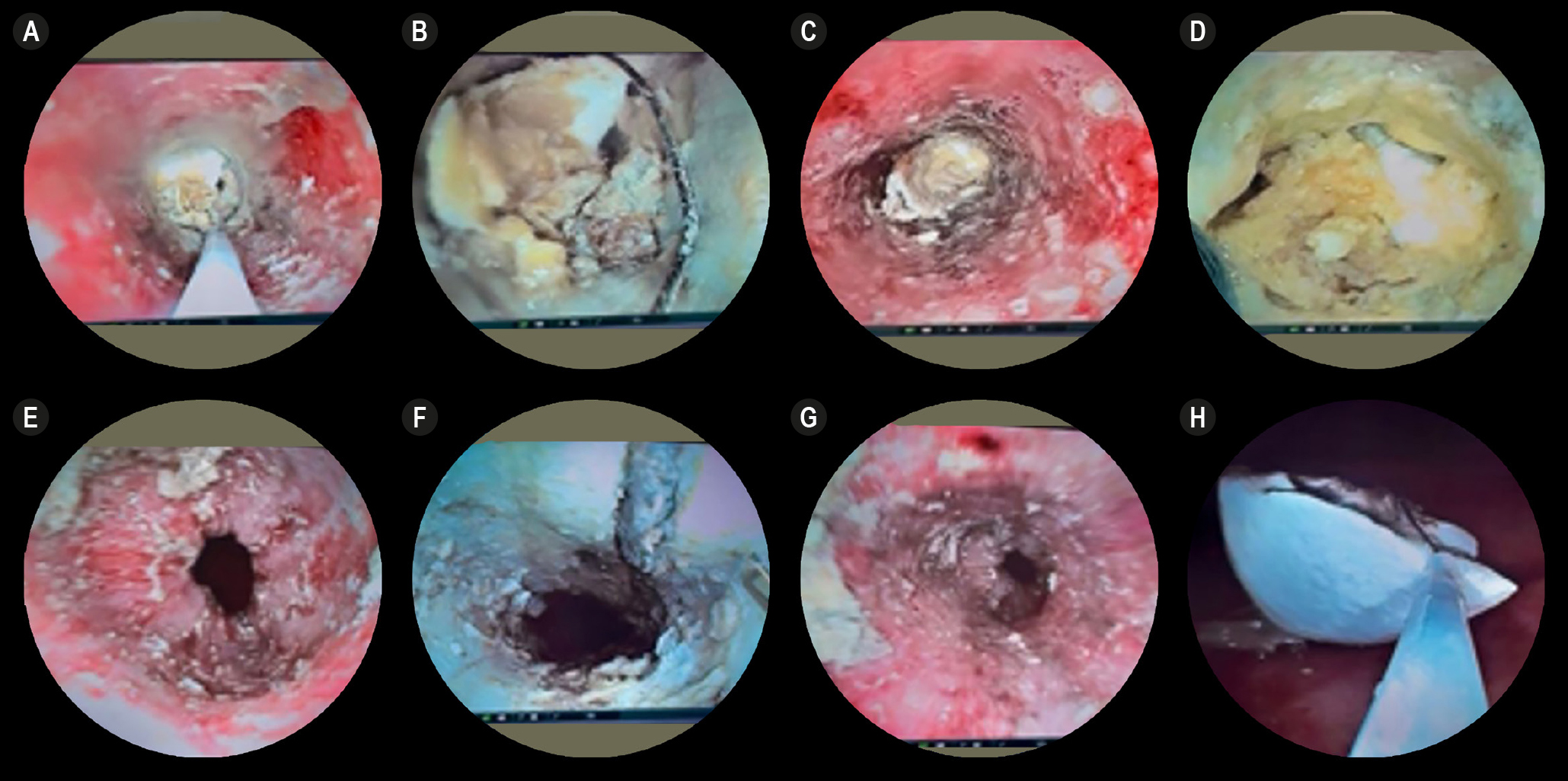
Introducción: la ingestión de sustancias cáusticas continúa siendo una causa importante de lesión esofágica grave, asociada a complicaciones tempranas como necrosis y retención intraluminal del agente, así como a secuelas tardías como estenosis esofágica. El manejo de estos pacientes requiere un enfoque multidisciplinario que incluya evaluación endoscópica temprana, soporte nutricional adecuado y estrategias terapéuticas dirigidas a prevenir la progresión fibrótica. Se presenta caso clínico de lesión cáustica esofágica grave con evolución a estenosis temprana, acompañado de una revisión narrativa del manejo actual.
Metodología: se realizó un reporte de caso complementado con una revisión narrativa de la literatura. Se efectuó una búsqueda dirigida en bases de datos biomédicas para identificar guías clínicas, estudios observacionales, ensayos clínicos y revisiones sistemáticas relacionadas con el tratamiento endoscópico de la estenosis esofágica cáustica, incluyendo el momento óptimo de dilatación, las terapias adyuvantes y los criterios de intervención quirúrgica.
Caso clínico: se describe el caso de un paciente adolescente con antecedente de ingestión de sustancia cáustica sólida que desarrolló una lesión esofágica grave con impactación intraluminal y posterior formación precoz de estenosis sintomática. El manejo incluyó un seguimiento clínico, evaluación endoscópica y radiológica seriada, soporte nutricional y dilatación endoscópica progresiva. Durante la evolución se consideraron terapias adyuvantes con el fin de optimizar la respuesta clínica y disminuir el riesgo de recurrencia.
Conclusiones: la estenosis esofágica secundaria a lesión cáustica representa un desafío terapéutico. La dilatación endoscópica oportuna constituye el pilar del tratamiento, pero su eficacia depende del momento de inicio, las características de la estenosis y la identificación temprana de factores de refractariedad que permitan definir oportunamente intervenciones avanzadas.
Descargas
Referencias bibliográficas
Contini S, Scarpignato C. Caustic injury of the upper gastrointestinal tract: A comprehensive review. World J Gastroenterol. 2013;19(25):3918-30. https://doi.org/10.3748/wjg.v19.i25.3918
Millar AJW, Cox SG. Caustic injury of the oesophagus. Pediatr Surg Int. 2015;31(2):111-21. https://doi.org/10.1007/s00383-014-3642-3
Mamede RCM, De Mello Filho FV. Treatment of caustic ingestion: An analysis of 239 cases. Dis Esophagus. 2002;15(3):210-3. https://doi.org/10.1046/j.1442-2050.2002.00263.x
Dorterler ME, Günendi T. Foreign body and caustic substance ingestion in childhood. Open Access Emerg Med. 2020;12:341-52. https://doi.org/10.2147/OAEM.S241190
Zargar SA, Kochhar R, Nagi B, Mehta S, Mehta SK. Ingestion of corrosive acids. Spectrum of injury to upper gastrointestinal tract and natural history. Gastroenterology. 1989;97(3):702-7. https://doi.org/10.1016/0016-5085(89)90641-0
Oliva S, Romano C, De Angelis P, Isoldi S, Mantegazza C, Felici E, et al. Foreign body and caustic ingestions in children: A clinical practice guideline: Foreign Bodies and Caustic ingestions in children. Dig Liver Dis. 2020;52(11):1266-81. https://doi.org/10.1016/j.dld.2020.07.016
Gaudreault P, Parent M, McGuigan MA, Chicoine L, Lovejoy FH. Predictability of esophageal injury from signs and symptoms: A study of caustic ingestion in 378 children. Pediatrics. 1983;71(5):767-70. https://doi.org/10.1542/peds.71.5.767
Temiz A, Oguzkurt P, Ezer SS, Ince E, Hicsonmez A. Predictability of outcome of caustic ingestion by esophagogastroduodenoscopy in children. World J Gastroenterol. 2012;18(10):1098-103. https://doi.org/10.3748/wjg.v18.i10.1098
Coelho-Prabhu N, Forbes N, Thosani NC, Storm AC, Pawa S, Kohli DR, et al. Adverse events associated with EGD and EGD-related techniques. Gastrointest Endosc. 2022;96(3):389-401.e1. https://doi.org/10.1016/j.gie.2022.04.024
Cohen NA, Bettenworth D, Sror N, Khedraki R, Yang Q, Abreu MT, et al. Definitions, diagnosis, management, and outcomes of upper gastrointestinal Crohn’s disease: an international, expert RAND/UCLA appropriateness study. Lancet Gastroenterol Hepatol. 2026;11(3):243-255. https://doi.org/10.1016/S2468-1253(25)00347-4
Vermeulen BD, de Zwart M, Sijben J, Soons E, van der Weerd L, Arese D, et al. Risk factors and clinical outcomes of endoscopic dilation in benign esophageal strictures: a long-term follow-up study. Gastrointest Endosc. 2020;91(5):1058-66. https://doi.org/10.1016/j.gie.2019.12.040
Kochhar R, Poornachandra KS, Dutta U, Agrawal A, Singh K. Early endoscopic balloon dilation in caustic-induced gastric injury. Gastrointest Endosc. 2010;71(4):737-44. https://doi.org/10.1016/j.gie.2009.11.038
Grooteman KV, Wong Kee Song LM, Vleggaar FP, Siersema PD, Baron TH. Non-adherence to the rule of 3 does not increase the risk of adverse events in esophageal dilation. Gastrointest Endosc. 2017;85(2):332-337.e1. https://doi.org/10.1016/j.gie.2016.07.062
Chirica M, Kelly MD, Siboni S, Aiolfi A, Riva CG, Asti E, et al. Esophageal emergencies: WSES guidelines. World J Emerg Surg. 2019;14(1):25-6. https://doi.org/10.1186/s13017-019-0245-2
Usta M, Erkan T, Cokugras FC, Urganci N, Onal Z, Gulcan M, et al. High doses of methylprednisolone in the management of caustic esophageal burns. Pediatrics. 2014;133(6):E1518-24. https://doi.org/10.1542/peds.2013-3331
Barret M, Beye B, Leblanc S, Beuvon F, Chaussade S, Batteux F, et al. Systematic review: The prevention of oesophageal stricture after endoscopic resection. Aliment Pharmacol Ther. 2015;42(1):20-39. https://doi.org/10.1111/apt.13254
Randhawa FA, Butt NF, Talat SO, Sabir SH, Qamar MA. Effectiveness of intralesional steroid injections with dilatation in corrosive oesophageal strictures-a randomized control tiral. J Pak Med Assoc. 2018;68(11):1556-9.
Nijhawan S, Udawat HP, Nagar P. Aggressive bougie dilatation and intralesional steroids is effective in refractory benign esophageal strictures secondary to corrosive ingestion. Dis Esophagus. 2016;29(8):1027-31. https://doi.org/10.1111/dote.12438
Zaki RAM, El-Asmar KM, Amra HS, Elshafei EA, Bersy MA, Allam AM. Topical mitomycin C application versus intralesional corticosteroid injection in the management of caustic esophageal strictures in pediatrics: A randomized controlled trial. J Pediatr Surg. 2026;61(3):162884. https://doi.org/10.1016/j.jpedsurg.2025.162884
Chen H, Liu Y, Xu M, Guo R, Zhang J, Li M, et al. Long-Term Efficacy of Repeated Endoscopic Incision Combined with Triamcinolone Injection in Patients with Recurrent Benign Esophageal Stricture. Dig Dis Sci. 2025;70(9):3077-88. https://doi.org/10.1007/s10620-025-09101-z
Chirica M, Bonavina L, Kelly MD, Sarfati E, Cattan P. Caustic ingestion. Lancet. 2017;389(10083):2041-52. https://doi.org/10.1016/S0140-6736(16)30313-0
Fugazza A, Repici A. Endoscopic Management of Refractory Benign Esophageal Strictures. Dysphagia. 2021;36(3):504-16. https://doi.org/10.1007/s00455-021-10270-y
Chobarporn T, Mesiri D, Tharavej C. Endoscopic and surgical treatment of refractory caustic esophageal strictures. Surg Endosc. 2025;39(7):4513-24. https://doi.org/10.1007/s00464-025-11820-3
Le Naoures P, Hamy A, Lerolle N, Métivier E, Lermite E, Venara A. Risk factors for symptomatic esophageal stricture after caustic ingestion-A retrospective cohort study. Dis Esophagus. 2017;30(6):29207003. https://doi.org/10.1093/dote/dox029
Singh AK, Gunjan D, Dash NR, Poddar U, Gupta P, Jain AK, et al. Short-term and long-term management of caustic-induced gastrointestinal injury: An evidence-based practice guidelines. Indian J Gastroenterol. 2025;44(5):646-74. https://doi.org/10.1007/s12664-024-01692-1
Bruzzi M, Chirica M, Resche-Rigon M, Corte H, Voron T, Sarfati E, et al. Emergency Computed Tomography Predicts Caustic Esophageal Stricture Formation. Ann Surg. 2019;270(1):109-14. https://doi.org/10.1097/SLA.0000000000002732
Pasha SF, Acosta RD, Chandrasekhara V, Chathadi KV, Decker GA, Early DS, et al. The role of endoscopy in the evaluation and management of dysphagia. Gastrointest Endosc. 2014;79(2):191-201. https://doi.org/10.1016/j.gie.2013.07.042
Singh AK, Reddy YR, Jena A, Appasani S, Gupta P, Sinha SK, et al. Endoscopic dilation with bougies versus balloons in caustic esophageal strictures: 17-year experience from a tertiary care center. Surg Endosc. 2023;37(11):8236-44. https://doi.org/10.1007/s00464-023-10384-4
Joshi P, Yadav R, Dangi A, Kumar P, Kumar S, Gupta V, et al. Corrosive Esophageal Strictures: From Dilatation to Replacement: A Retrospective Cohort Study. Dysphagia. 2020;35(4):558-67. https://doi.org/10.1007/s00455-019-10058-1
Zhang YW, Wei FX, Qi XP, Liu Z, Xu XD, Zhang YC. Efficacy and Safety of Endoscopic Intralesional Triamcinolone Injection for Benign Esophageal Strictures. Gastroenterol Res Pract. 2018;2018:7619298. https://doi.org/10.1155/2018/7619298
Yang Y, Chen Y, Cai L, Qi J, Wang Z, Mo X. Analysis of Clinical Efficacy of Surgical Progressive Treatment for Corrosive Esophageal Stricture in Children. J Pediatr Surg. 2026;61(4):162891. https://doi.org/10.1016/j.jpedsurg.2025.162891
Papaconstantinou D, Katsaros I, Gkoutziotis I, Kechagias A, Tsamakis K, Ntikoudi E, et al. Corrosive ingestion-induced esophageal injuries: A systematic review and meta-analysis. Surg (United States). 2025;187:25-6. https://doi.org/10.1016/j.surg.2025.109658
Ajani JA, Barthel JS, Bentrem DJ, D’Amico TA, Das P, Denlinger CS, et al. Esophageal and esophagogastric junction cancers. JNCCN J Natl Compr Cancer Netw. 2011;9(8):830-87. https://doi.org/10.6004/jnccn.2011.0072
Raynaud K, Seguy D, Rogosnitzky M, Saulnier F, Pruvot FR, Zerbib P. Conservative management of severe caustic injuries during acute phase leads to superior long-term nutritional and quality of life (QoL) outcome. Langenbeck’s Arch Surg. 2016;401(1):81-7. https://doi.org/10.1007/s00423-015-1366-z
Descargas
Publicado
Cómo citar
Número
Sección
Licencia
Derechos de autor 2026 Revista colombiana de Gastroenterología

Esta obra está bajo una licencia internacional Creative Commons Atribución-NoComercial-SinDerivadas 4.0.
Aquellos autores/as que tengan publicaciones con esta revista, aceptan los términos siguientes:
Los autores/as ceden sus derechos de autor y garantizarán a la revista el derecho de primera publicación de su obra, el cuál estará simultáneamente sujeto a la Licencia de reconocimiento de Creative Commons que permite a terceros compartir la obra siempre que se indique su autor y su primera publicación en esta revista.
Los contenidos están protegidos bajo una licencia de Creative Commons Reconocimiento-NoComercial-SinObraDerivada 4.0 Internacional.


| Estadísticas de artículo | |
|---|---|
| Vistas de resúmenes | 2 |
| Vistas de PDF | 0 |
| Descargas de PDF | 0 |
| Vistas de HTML | 0 |
| Otras vistas | 0 |