Quality of life in children with functional constipation: Assessment before and after treatment
DOI:
https://doi.org/10.22516/25007440.1529Keywords:
Constipation, quality of life, gastroenterology, pediatrics, polyethylene glycolsAbstract
Introduction: Functional constipation may have a significant adverse impact on health-related quality of life. In Colombia, evidence regarding changes in quality of life following treatment in the pediatric population remains limited.
Methods: A quasi-experimental before-and-after study was conducted in patients aged 2 to 18 years with a diagnosis of functional constipation who were evaluated at the pediatric gastroenterology clinic of a tertiary-care university hospital in Bogotá, Colombia. Health-related quality of life was assessed using the Pediatric Quality of Life Inventory (PedsQL™) 4.0 at baseline and 3 months after first-line treatment. Total and domain-specific scores were compared before and after the intervention.
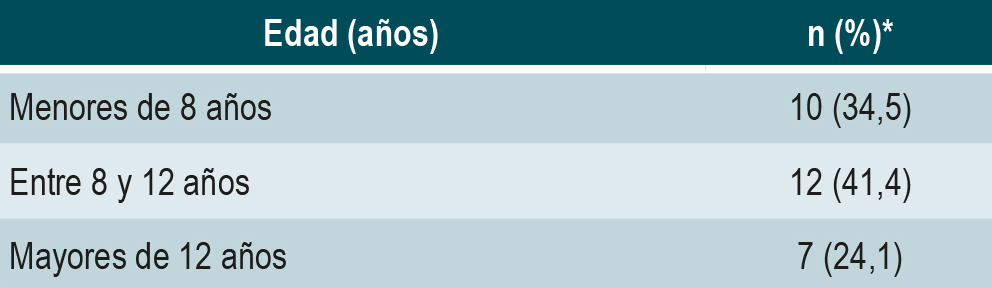
Results: Twenty-nine patients were included, with a median age of 9.3 years. The median total PedsQL™ 4.0 score increased from 68 (interquartile range [IQR], 14.0) before treatment to 82 (IQR, 25.0) after 3 months. Improvements were observed across all domains, reaching statistical significance in the emotional (p = 0.007) and social (p = 0.021) domains. The proportion of patients with good overall quality of life increased from 20.7% to 62.1% (p = 0.001).
Conclusions: In the pediatric population evaluated, functional constipation was associated with impaired quality of life, particularly in the emotional and social domains. Three months after initiation of first-line treatment, a significant improvement in overall quality of life was observed.
Downloads
References
Mulhem E, Beaumont W. Constipation in children and adolescents: evaluation and treatment. Am Fam Physician. 2022;105(5):469-78.
Avelar Rodríguez D, Toro Monjaraz E, Ramírez Mayans J. Constipación funcional en pediatría: criterios de Roma IV, diagnóstico y tratamiento. Acta Pediatr Mex. 2018;39(1):81-84. https://doi.org/10.18233/APM39No1pp81-841543
Remes-Troche JM, Coss-Adame E, López-Colombo A, Amieva-Balmori M, Sánchez RC, Guindic LC, et al. The Mexican consensus on chronic constipation. Rev Gastroenterol Mex. 2018;83(2):168-89. https://doi.org/10.1016/j.rgmxen.2018.05.012
García-Zermeño KR, Remes-Troche JM. Constipación crónica: conceptos actuales desde la fisiopatología hasta el tratamiento. Acta Gastroenterol Latinoam. 2021;51(1):14-28. https://doi.org/10.52787/ZRRJ9030
Espinoza M. Estreñimiento en pediatría. Rev Chil Nutr. 2002;29(3):272-79. https://doi.org/10.4067/S0717-75182002000300001
Gijsbers CFM, Kneepkens CMF, Vergouwe Y, Büller HA. Occult constipation: faecal retention as a cause of recurrent abdominal pain in children. Eur J Pediatr. 2014;173(6):781-85. https://doi.org/10.1007/s00431-013-2257-3
Lewis SJ, Heaton KW. Stool form scale as a useful guide to intestinal transit time. Scand J Gastroenterol. 1997;32(9):920-24. https://doi.org/10.3109/00365529709011203
Ponce J, López de la Torre M. Estreñimiento funcional en pediatría: diagnóstico y tratamiento. Arch Argent Pediatr. 2021;119(1):39-47. https://doi.org/10.5546/aap.2021.39
Tabbers MM, Di Lorenzo C, Berger MY, Faure C, Langendam MW, Nurko S, et al. Evaluation and treatment of functional constipation in infants and children: evidence-based recommendations. J Pediatr Gastroenterol Nutr. 2014;58(2):258-74. https://doi.org/10.1097/MPG.0000000000000266
Vélez M, Villada Ramírez A, Amaya Arias AC, Arias A, Eslava-Schmalbach JH. Validación por modelo de Rasch del cuestionario Pediatric Quality of Life Inventory en niños y adolescentes colombianos. Rev Colomb Psiquiatr. 2016;45(3):186-93. https://doi.org/10.1016/j.rcp.2016.02.004
Varni JW, Seid M, Rode CA. The PedsQL: measurement model for the pediatric quality of life inventory. Med Care. 1999;37(2):126-39. https://doi.org/10.1097/00005650-199902000-00003
Connor RJ. Sample size for testing differences in proportions for the paired-sample design. Biometrics. 1987;43(1):207-11. https://doi.org/10.2307/2531965
Downloads
Published
How to Cite
Issue
Section
License
Copyright (c) 2026 Revista colombiana de Gastroenterología

This work is licensed under a Creative Commons Attribution-NonCommercial-NoDerivatives 4.0 International License.
Aquellos autores/as que tengan publicaciones con esta revista, aceptan los términos siguientes:
Los autores/as ceden sus derechos de autor y garantizarán a la revista el derecho de primera publicación de su obra, el cuál estará simultáneamente sujeto a la Licencia de reconocimiento de Creative Commons que permite a terceros compartir la obra siempre que se indique su autor y su primera publicación en esta revista.
Los contenidos están protegidos bajo una licencia de Creative Commons Reconocimiento-NoComercial-SinObraDerivada 4.0 Internacional.


| Article metrics | |
|---|---|
| Abstract views | 1 |
| Galley views | 0 |
| PDF Views | 0 |
| HTML views | 0 |
| Other views | 0 |