Habitual coffee consumption and the incidence of gastric cancer: An overview of reviews
DOI:
https://doi.org/10.22516/25007440.1531Keywords:
Coffee, gastric neoplasms, systematic review, incidenceAbstract
Introduction: Gastric cancer is one of the leading causes of morbidity and mortality in Colombia. Uncertainty remains regarding the potential preventive effect of coffee consumption on the digestive tract, despite its antioxidant, antiangiogenic, and tumor growth–modulating properties. The objective is to collect, analyze, and summarize the evidence regarding the effect of regular coffee consumption on the incidence of gastric cancer.
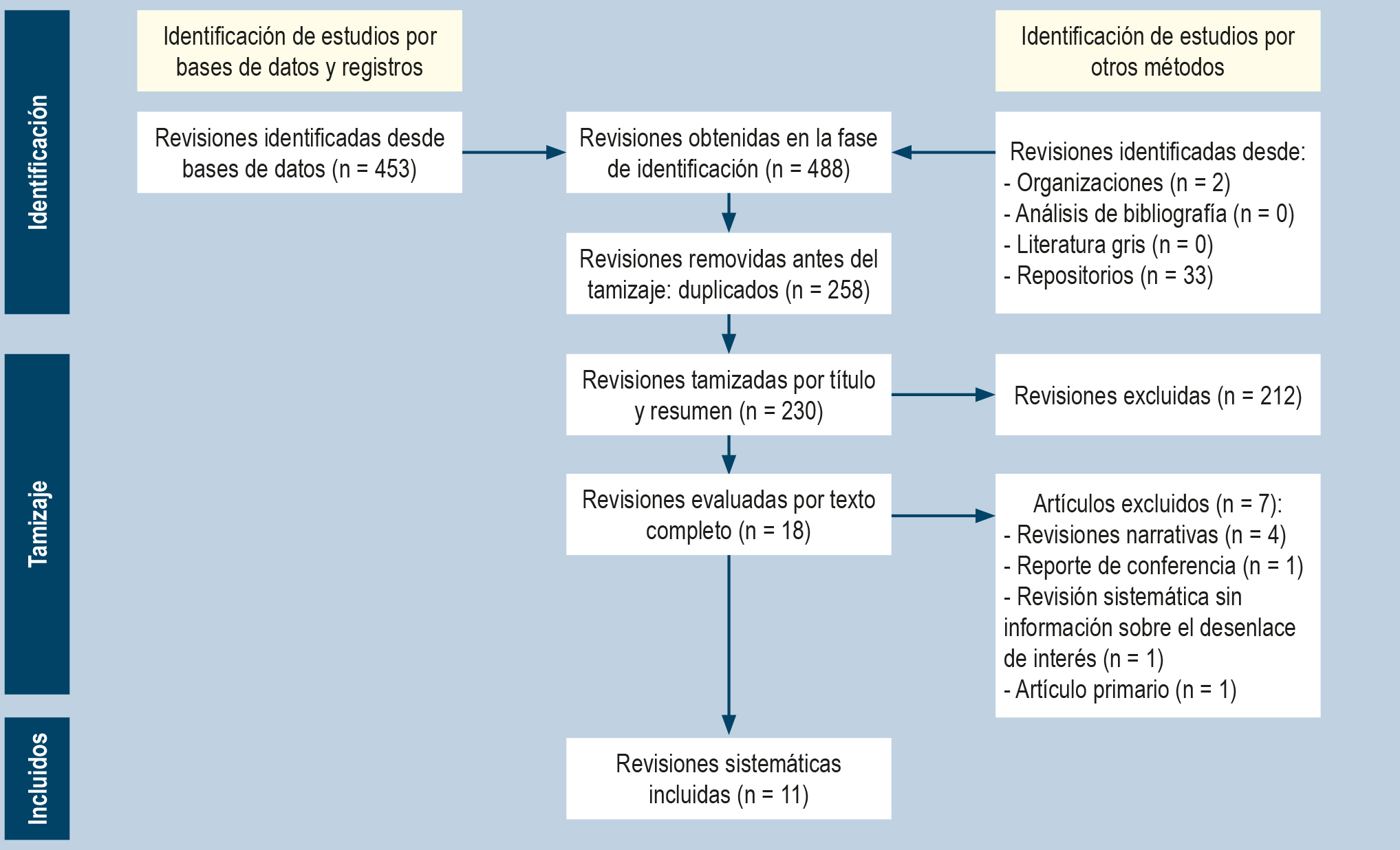
Methods: An overview of systematic reviews of the literature was conducted to examine the association between gastric cancer incidence and habitual coffee consumption. Searches were performed in Embase, PubMed, Cochrane, and LILACS through May 2025, including gray literature. Methodological quality was assessed using AMSTAR 2. Study selection and data extraction were performed independently by pairs of investigators.
Results: Eleven systematic reviews were included. Only one demonstrated a statistically significant protective effect of coffee consumption on the incidence of gastric cancer (OR, 0.89; 95% CI, 0.82–0.98). Two other reviews reported an increased risk (RR, 1.24 [95% CI, 1.03–1.49] and RR, 1.16 [95% CI, 1.03–1.32]), whereas the remaining eight reviews found no statistically significant associations. Additional findings were obtained regarding coffee type, preparation method, and tumor location.
Discussion: No conclusive evidence was found to establish coffee as either a protective or a risk factor for gastric cancer. The multifactorial complexity of the disease and the low methodological quality of the available reviews may contribute to these findings.
Downloads
References
Sung H, Ferlay J, Siegel RL, Laversanne M, Soerjomataram I, Jemal A, et al. Global Cancer Statistics 2020: GLOBOCAN Estimates of Incidence and Mortality Worldwide for 36 Cancers in 185 Countries. CA Cancer J Clin. 2021;71(3):209-49. https://doi.org/10.3322/caac.21660
IARC Working Group on the Evaluation of Carcinogenic Risks to Humans. Drinking Coffee, Mate, and Very Hot Beverages. Lyon (FR): International Agency for Research on Cancer; 2018.
Sartini M, Bragazzi NL, Spagnolo AM, Schinca E, Ottria G, Dupont C, et al. Coffee Consumption and Risk of Colorectal Cancer: A Systematic Review and Meta-Analysis of Prospective Studies. Nutrients. 2019;11(3):694. https://doi.org/10.3390/nu11030694
Dranoff JA. Coffee Consumption and Prevention of Cirrhosis: In Support of the Caffeine Hypothesis. Gene Expr. 2017;18(1):1-3. https://doi.org/10.3727/105221617X15046391179559
Strocchi G, Rubiolo P, Cordero C, Bicchi C, Liberto E. Acrylamide in coffee: What is known and what still needs to be explored. A review. Food Chem. 2022;393:133406. https://doi.org/10.1016/j.foodchem.2022.133406
Aromataris E, Fernandez R, Godfrey CM, Holly C, Khalil H, Tungpunkom P. Summarizing systematic reviews: methodological development, conduct and reporting of an umbrella review approach. Int J Evid Based Healthc. 2015;13(3):132-40. https://doi.org/10.1097/XEB.0000000000000055
Gates M, Gates A, Pieper D, Fernandes RM, Tricco AC, Moher D, et al. Reporting guideline for overviews of reviews of healthcare interventions: development of the PRIOR statement. BMJ. 2022;378:e070849. https://doi.org/10.1136/bmj-2022-070849
Silva W, Henao S, Chaves LD, Alba Talero LH, Badoui Rodriguez N, Peñaloza Parra M. Relación entre el consumo de café y el cáncer gástrico: protocolo de una revisión tipo sombrilla. Salud Javeriana. 2025;2. https://doi.org/10.11144/Javeriana.salud2.cccg
Perry R, Whitmarsh A, Leach V, Davies P. A comparison of two assessment tools used in overviews of systematic reviews: ROBIS versus AMSTAR 2. Syst Rev. 2021;10(1):273. https://doi.org/10.1186/s13643-021-01819-x
Pérez-Bracchiglione J, Meza N, Bangdiwala SI, Niño de Guzmán E, Urrútia G, Bonfill X, et al. Graphical Representation of Overlap for OVErviews: GROOVE tool. Res Synth Methods. 2022;13(3):381-8. https://doi.org/10.1002/jrsm.1557
Alicandro G, Tavani A, La Vecchia C. Coffee and cancer risk: a summary overview. Eur J Cancer Prev. 2017;26(5):424-32. https://doi.org/10.1097/CEJ.0000000000000341
Rozar J, Priya V, Gayathri R. Relationship between Coffee Consumption and Cancer- A Review. J Pharm Sci. 2016;8(6):424-7.
Fu J, Shin WK, Huang D, De la Torre K, Kang D, Shin S. Fruit and salt consumption are related to the risk of gastric cancer incidence in Asian populations: a comprehensive systematic review and meta-analysis of cohort studies. Epidemiol Rev. 2025;47(1):mxaf007. https://doi.org/10.1093/epirev/mxaf007
Kim JH, Jun S, Kim J. Dietary intake and cancer incidence in Korean adults: a systematic review and meta-analysis of observational studies. Epidemiol Health. 2023;45:e2023102. https://doi.org/10.4178/epih.e2023102
Lukic M, Nilsson LM, Skeie G, Lindahl B, Braaten T. Coffee consumption and risk of rare cancers in Scandinavian countries. Eur J Epidemiol. 2018;33(3):287-302. https://doi.org/10.1007/s10654-018-0369-9
Shin S, Lee JE, Loftfield E, Shu XO, Abe SK, Rahman MS, et al. Coffee and tea consumption and mortality from all causes, cardiovascular disease and cancer: A pooled analysis of prospective studies from the Asia Cohort Consortium. Int J Epidemiol. 2022;51(2):626-40. https://doi.org/10.1093/ije/dyab161
Martimianaki G, Bertuccio P, Alicandro G, Pelucchi C, Bravi F, Carioli G, et al. Coffee consumption and gastric cancer: A pooled analysis from the Stomach cancer Pooling Project consortium. European Journal of Cancer Prevention. 2022;31(2):117-27. https://doi.org/10.1097/CEJ.0000000000000680
Botelho F, Lunet N, Barros H. Coffee and gastric cancer: Systematic review and meta-analysis. Cad Saude Publica. 2006;22(5):889-900. https://doi.org/10.1590/S0102-311X2006000500002
Shen Z, Liu H, Cao H. Coffee consumption and risk of gastric cancer: An updated meta-analysis. Clin Res Hepatol Gastroenterol. 2015;39(2):245-53. https://doi.org/10.1016/j.clinre.2014.09.005
Zeng SB, Weng H, Zhou M, Duan XL, Shen XF, Zeng XT. Long-term coffee consumption and risk of gastric cancer: A PRISMA-compliant dose-response meta-analysis of prospective cohort studies. Medicine (Baltimore). 2015;94(38):e1640. https://doi.org/10.1097/MD.0000000000001640
Liu H, Hua Y, Zheng X, Shen Z, Luo H, Tao X, et al. Effect of coffee consumption on the risk of gastric cancer: A systematic review and meta-analysis of prospective cohort studies. PLoS One. 2015;10(5):e0128501. https://doi.org/10.1371/journal.pone.0128501
Li L, Gan Y, Wu C, Qu X, Sun G, Lu Z. Coffee consumption and the risk of gastric cancer: A meta-analysis of prospective cohort studies. BMC Cancer. 2015;15:733. https://doi.org/10.1186/s12885-015-1758-z
Fang X, Wei J, He X, An P, Wang H, Jiang L, et al. Landscape of dietary factors associated with risk of gastric cancer: A systematic review and dose-response meta-analysis of prospective cohort studies. Eur J Cancer. 2015;51(18):2820-32. https://doi.org/10.1016/j.ejca.2015.09.010
Xie Y, Huang S, He T, Su Y. Coffee consumption and risk of gastric cancer: an updated meta-analysis. Asia Pac J Clin Nutr. 2016;25(3):578-88. https://doi.org/10.6133/apjcn.092015.07
Deng W, Yang H, Wang J, Cai J, Bai Z, Song J, et al. Coffee consumption and the risk of incident gastric cancer - A meta-analysis of prospective cohort studies. Nutr Cancer. 2016;68(1):40-7. https://doi.org/10.1080/01635581.2016.1115093
Poorolajal J, Moradi L, Mohammadi Y, Cheraghi Z, Gohari-Ensaf F. Risk factors for stomach cancer: a systematic review and meta-analysis. Epidemiol Health. 2020;42:e2020004. https://doi.org/10.4178/epih.e2020004
Song H, Shen X, Chu Q, Zheng X. Coffee consumption is not associated with the risk of gastric cancer: An updated systematic review and meta-analysis of prospective cohort studies. Nutr Res. 2022;102:35-44. https://doi.org/10.1016/j.nutres.2022.03.002
Fakhri M, Fakheri H, Moosazadeh M, Ramezanpour M, Yousofpour M. The relationship between coffee consumption and the risk of gastric cancer; a systematic review and meta-analysis. Immunopathol Persa. 2022;10(10):e33406. https://doi.org/10.34172/ipp.2022.33406
Tsubono Y, Nishino Y, Komatsu S, Hsieh CC, Kanemura S, Tsuji I, et al. Green tea and the risk of gastric cancer in Japan. N Engl J Med. 2001;344(9):632-6. https://doi.org/10.1056/NEJM200103013440903
Ji BT, Chow WH, Yang G, McLaughlin JK, Gao RN, Zheng W, et al. The influence of cigarette smoking, alcohol, and green tea consumption on the risk of carcinoma of the cardia and distal stomach in Shanghai, China. Cancer. 1996;77(12):2449-457. https://doi.org/10.1002/(SICI)1097-0142(19960615)77:12<2449:AID-CNCR6>3.0.CO;2-H
He P, Li X, Zou D, Tang F, Chen H, Li Y. Environmental factors inducing gastric cancer: insights into risk and prevention strategies. Discov Oncol. 2025;16(1):25. https://doi.org/10.1007/s12672-025-01771-5
Yusefi AR, Lankarani KB, Bastani P, Radinmanesh M, Kavosi Z. Risk factors for gastric cancer: A systematic review. Asian Pac J Cancer Prev. 2018;19(3):591-603. https://doi.org/10.22034/APJCP.2018.19.3.591
Yasuda T, Wang YA. Gastric cancer immunosuppressive microenvironment heterogeneity: implications for therapy development. Trends Cancer. 2024;10(7):627-42. https://doi.org/10.1016/j.trecan.2024.03.008
Gates A, Gates M, Duarte G, Cary M, Becker M, Prediger B, et al. Evaluation of the reliability, usability, and applicability of AMSTAR, AMSTAR 2, and ROBIS: Protocol for a descriptive analytic study. Syst Rev. 2018;7(1):85. https://doi.org/10.1186/s13643-018-0746-1
Sanikini H, Dik VK, Siersema PD, Bhoo-Pathy N, Uiterwaal CSPM, Peeters PHM, et al. Total, caffeinated and decaffeinated coffee and tea intake and gastric cancer risk: Results from the EPIC cohort study. Int J Cancer. 2015;136(6):E720-30. https://doi.org/10.1002/ijc.29223
Svatun ÅL, Løchen ML, Thelle DS, Wilsgaard T. Association between espresso coffee and serum total cholesterol: the Tromsø Study 2015-2016. Open Heart. 2022;9(1):e001946. https://doi.org/10.1136/openhrt-2021-001946
Merino J, Guasch-Ferré M, Ellervik C, Dashti HS, Sharp SJ, Wu P, et al. Quality of dietary fat and genetic risk of type 2 diabetes: Individual participant data meta-analysis. BMJ. 2019;366:l4292. https://doi.org/10.1136/bmj.l4292
Ren JS, Freedman ND, Kamangar F, Dawsey SM, Hollenbeck AR, Schatzkin A, et al. Tea, coffee, carbonated soft drinks and upper gastrointestinal tract cancer risk in a large United States prospective cohort study. Eur J Cancer. 2010;46(10):1873-81. https://doi.org/10.1016/j.ejca.2010.03.025
Lunny C, Pieper D, Thabet P, Kanji S. Managing overlap of primary study results across systematic reviews: practical considerations for authors of overviews of reviews. BMC Med Res Methodol. 2021;21(1):140. https://doi.org/10.1186/s12874-021-01269-y
Downloads
Published
How to Cite
Issue
Section
License
Copyright (c) 2026 Revista colombiana de Gastroenterología

This work is licensed under a Creative Commons Attribution-NonCommercial-NoDerivatives 4.0 International License.
Aquellos autores/as que tengan publicaciones con esta revista, aceptan los términos siguientes:
Los autores/as ceden sus derechos de autor y garantizarán a la revista el derecho de primera publicación de su obra, el cuál estará simultáneamente sujeto a la Licencia de reconocimiento de Creative Commons que permite a terceros compartir la obra siempre que se indique su autor y su primera publicación en esta revista.
Los contenidos están protegidos bajo una licencia de Creative Commons Reconocimiento-NoComercial-SinObraDerivada 4.0 Internacional.


| Article metrics | |
|---|---|
| Abstract views | 7 |
| Galley views | 0 |
| PDF Views | 0 |
| HTML views | 0 |
| Other views | 0 |